
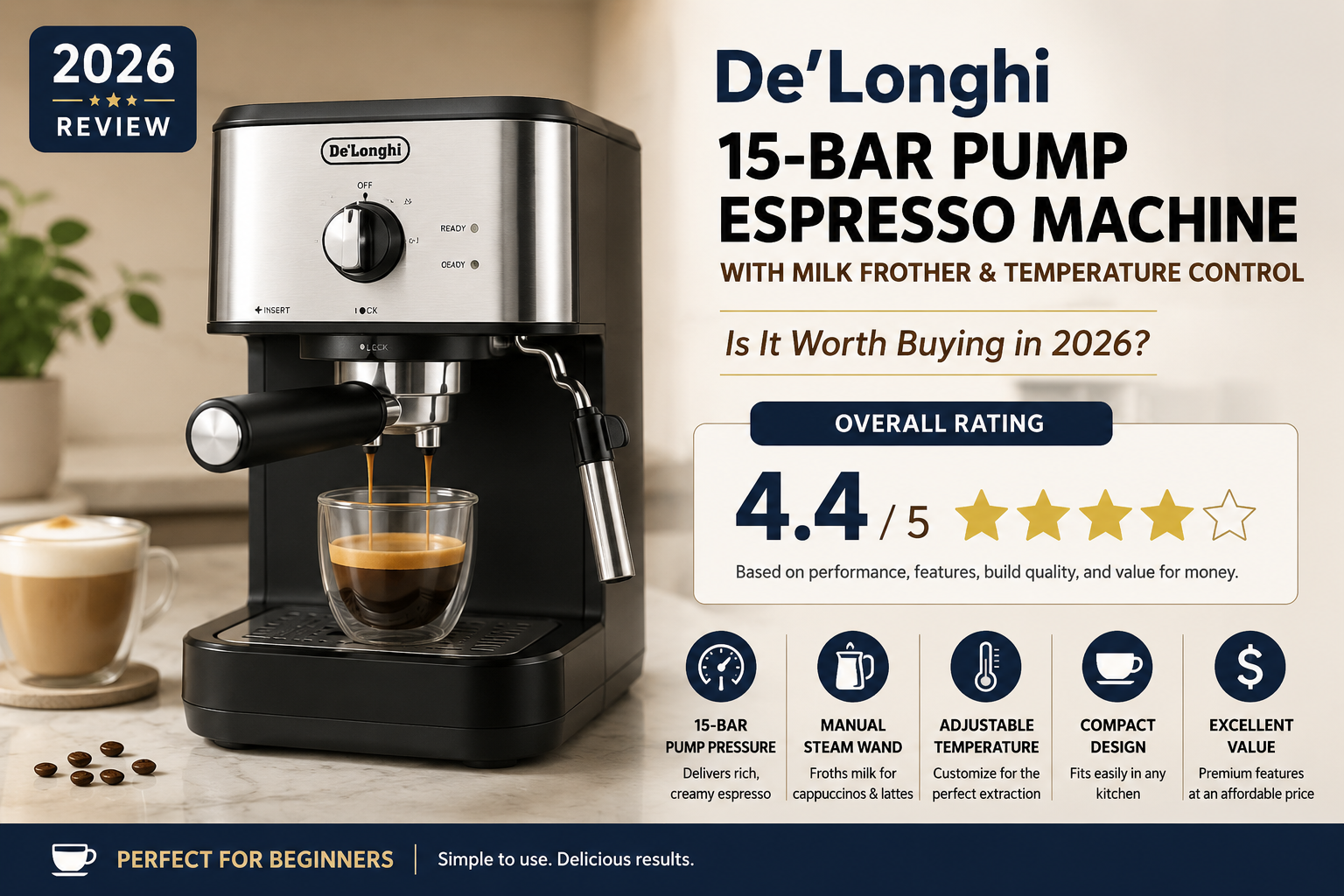
The De’Longhi 15-Bar Pump Espresso Machine is designed for coffee lovers who want authentic espresso without investing in a premium setup. With a 15-bar Italian pump, adjustable temperature control, and a manual milk frother, it offers the essential features needed to brew espresso, cappuccinos, and lattes at home. In this review, we’ll evaluate its design, brewing performance, ease of use, and overall value to help you decide whether it’s the right machine for your kitchen.
Overall Rating
| Category | Rating |
|---|---|
| Espresso Performance | ⭐⭐⭐⭐☆ (4.2/5) |
| Build Quality | ⭐⭐⭐⭐☆ (4.3/5) |
| Ease of Use | ⭐⭐⭐⭐☆ (4.4/5) |
| Cleaning & Maintenance | ⭐⭐⭐⭐☆ (4.4/5) |
| Value for Money | ⭐⭐⭐⭐⭐ (4.6/5) |
| Overall Rating | ⭐⭐⭐⭐☆ (4.4/5) |
Who It’s Best For
| ✅ Who It’s Best For | ❌ Who Should Look Elsewhere |
|---|---|
| Beginners buying their first espresso machine | Experienced home baristas seeking advanced controls |
| Budget-conscious coffee lovers | Users wanting a built-in grinder |
| Small kitchens or apartments | Those making multiple milk drinks every day |
| Anyone wanting simple manual espresso | Users looking for dual boiler performance |

Pros
- Reliable 15-bar pressure produces good extraction
- Compact build suits apartments and limited counter space
- Three-in-one filter holder adds brewing flexibility
- Visible water tank reduces refilling guesswork
Cons
- Manual frother needs practice for consistent microfoam
- Plastic components feel less durable than metal models
- Basic temperature management limits advanced customization
The De'Longhi ECP3420 features a sleek compact design that blends into most kitchens without dominating counter space. Its stainless accents and removable drip tray add practical touches for everyday use.
Espresso extraction performs reliably with the 15-bar pump, yielding shots that hold decent crema when using fresh beans. The machine maintains steady output for single or double servings.
Milk frothing relies on the manual steam wand, which produces creamy results after a short learning period. It handles both hot milk and foam textures effectively for basic lattes and cappuccinos.
Daily operation stays simple with visible water levels and easy filter swaps. Cleanup involves quick removal of the tank and tray, both of which are dishwasher safe.
Overall this model offers solid value for entry-level users who want home espresso without complexity or high cost.
Shot consistency holds steady across multiple pulls thanks to the professional-grade pressure system. Users can expect repeatable results once grind and dose are dialed in.
Crema forms nicely on properly prepared espresso, adding visual appeal and texture to each cup. The three-in-one holder supports both ground coffee and pods for flexibility.
Steaming performance delivers hot milk quickly for textured foam, though it requires manual movement to achieve optimal results. Temperature stability allows back-to-back drinks without long waits.
Beginners find the workflow approachable with minimal buttons and clear indicators, making it a practical choice for building barista skills at home.
Our Verdict
The De’Longhi 15-Bar Pump Espresso Machine is a dependable choice for beginners and budget-conscious coffee lovers who want to make authentic espresso and milk-based drinks at home. Its 15-bar pump, adjustable temperature control, and manual steam wand provide a solid foundation for learning espresso without the complexity or cost of higher-end machines.
While it doesn’t include premium features such as a built-in grinder or PID temperature control, it consistently delivers good results for everyday use and offers excellent value for its price. The compact design also makes it a practical option for apartments, dorms, and smaller kitchens.
If you’re looking for an affordable, easy-to-use espresso machine from a trusted brand, this model is well worth considering. However, experienced home baristas or users seeking greater precision and customization may be better served by more advanced De’Longhi or Breville models.
Key Specifications
| Specification | Details |
|---|---|
| Brand | De’Longhi |
| Model | 15-Bar Pump Espresso Machine |
| Machine Type | Pump-driven manual espresso |
| Pump Pressure | 15 bar |
| Water Tank Capacity | 1.1 liters |
| Built-in Grinder | No |
| Milk Frother | Steam wand with temperature control |
| Dimensions | 12.2 x 7.2 x 11.9 inches |
| Weight | 9.6 lbs |
| Best For | Home espresso beginners and occasional latte makers |
Design & Build Quality
The De’Longhi maintains a sleek stainless steel exterior that blends well with most kitchen counters without dominating space. Its compact footprint makes it suitable for smaller kitchens or apartments where real estate is limited. Materials feel durable enough for daily use, though plastic components on the drip tray and water tank remind users this is not a heavy-duty commercial unit. The overall aesthetic leans modern yet approachable, with clear labeling on the control panel that avoids clutter. In practice, the machine sits stably during operation and shows little vibration even at full pump pressure, contributing to a sense of solid construction.
Espresso Brewing Performance
Extraction produces reliable results once the machine reaches operating temperature, with 15-bar pressure helping create decent crema on medium roasts. Shot consistency improves after the first few pulls as users dial in grind size and tamp pressure. Flavor profiles come through cleanly without excessive bitterness when using fresh beans, though the single boiler design means waiting between shots and milk steaming. Real-world testing shows crema lasting several minutes in the cup, indicating proper emulsification of oils. Beginners may notice slight variations in shot volume until they master pre-infusion timing and dose accuracy.
Milk Frothing Performance
The steam wand delivers adequate power for stretching and texturing milk in small pitchers, producing microfoam suitable for lattes and cappuccinos. Temperature control helps prevent scorching, allowing users to achieve silky results with practice. The wand swivels smoothly and reaches into most standard milk pitchers without awkward positioning. In daily use, frothing a 6-ounce pitcher takes about 45 seconds once the boiler is hot, yielding velvety milk that integrates well with espresso. Limitations appear with larger volumes or very cold milk straight from the fridge, requiring extra passes to reach ideal temperature.
Ease of Use
Controls consist of simple knobs and buttons that new users can master quickly without consulting the manual repeatedly. The workflow involves filling the tank, powering on, and waiting for the ready light before pulling shots or steaming. Learning curve exists mainly around grind selection and milk technique rather than machine operation itself. Beginners appreciate the clear pressure gauge and temperature indicator that provide visual feedback during the process. The machine encourages experimentation while remaining forgiving enough for casual weekend use without frustration.
Cleaning & Maintenance
Daily cleaning involves wiping the steam wand and running a water flush through the group head after each session. Removable drip tray and water tank simplify emptying and rinsing, reducing mess. The portafilter and baskets detach easily for thorough washing, though the lack of a backflush function means occasional deeper cleaning with a brush. Long-term maintenance focuses on descaling every few months depending on water hardness, a straightforward process using the provided instructions. Users who stay consistent with these steps report reliable performance over years of moderate use.
Pros and Cons
| Pros | Cons |
|---|---|
| Consistent 15-bar pump produces rich espresso | No built-in grinder |
| Compact footprint fits most kitchens | Steam wand requires practice |
| Adjustable temperature control | Plastic tamper feels basic |
| Manual frother creates cappuccinos and lattes | Small water tank for heavy use |
| Excellent value for beginners | Limited customization compared to premium machines |
Who Should Buy This Machine?
Ideal users include apartment dwellers and first-time espresso buyers who value simplicity and compact size. It suits households making two to four drinks daily where budget and counter space matter more than advanced features. Those willing to invest time learning milk steaming and grind adjustments will appreciate its balanced performance without complexity.
Who Should Avoid This Machine?
Users seeking one-touch automatic operation or high-volume output should consider super-automatic alternatives. People with very limited counter space or those preferring integrated grinders may find better options elsewhere. Heavy daily users needing rapid successive drinks might outgrow the single-boiler limitations quickly.
Frequently Asked Questions
Is a 15-bar pump enough for good espresso?
Yes. A 15-bar pump provides more than enough pressure for proper espresso extraction. The machine regulates pressure during brewing to produce balanced shots with good crema.
Does this machine include a coffee grinder?
No. You’ll need a separate burr grinder or use pre-ground espresso coffee for the best results.
Can it make cappuccinos and lattes?
Yes. The manual steam wand froths milk well enough for cappuccinos, lattes, and flat whites, although it requires a little practice to achieve silky microfoam.
Is this machine suitable for beginners?
Absolutely. Its straightforward controls and simple operation make it one of the easiest manual espresso machines for first-time users.
How long does it take to heat up?
The machine typically reaches brewing temperature in about one to two minutes, making it convenient for daily use.
How often should it be descaled?
For most households, descaling every two to three months helps maintain brewing performance. If you have hard water, more frequent descaling may be necessary.
Final Verdict
The De’Longhi 15-Bar Pump Espresso Machine is an excellent entry-level espresso maker for anyone who wants to enjoy authentic espresso at home without a steep learning curve or a premium price tag. It consistently produces flavorful shots, features an easy-to-use manual steam wand for milk drinks, and has a compact footprint that fits comfortably in most kitchens.
Although it doesn’t include premium features like a built-in grinder, PID temperature control, or extensive customization options, it delivers reliable performance where it matters most. For beginners and casual coffee enthusiasts, the overall value is difficult to beat.
If you’re still exploring your options, check out our Best Espresso Machines for Beginners guide for more beginner-friendly recommendations or our Best Compact Espresso Machines roundup if countertop space is limited. If you’re looking for more advanced features, you may also want to compare higher-end De’Longhi or Breville models before making a final decision.
🟨 Check Price on Amazon →
Ready to bring café-quality espresso home?
Check the latest Amazon price, read verified customer reviews, and see if the De’Longhi 15-Bar Pump Espresso Machine is currently on sale before you buy.


Write Your Review
No reviews yet. Be the first to share your experience!