
Introduction
Many espresso beginners focus on buying the right machine but overlook one of the most important ingredients: coffee beans.
Even the best espresso machine cannot produce exceptional espresso if the beans are stale, poorly roasted, or unsuitable for espresso brewing. The right beans can dramatically improve flavor, crema, body, and consistency.
This guide explains how to choose the best coffee beans for espresso and what characteristics matter most when building a home espresso setup.
What Makes A Great Espresso Bean?
Espresso places unique demands on coffee beans because the brewing process is highly concentrated and pressure-based.
A great espresso bean should provide:
- Rich flavor
- Balanced acidity
- Pleasant sweetness
- Full body
- Consistent extraction
- Good crema production
Many specialty coffee roasters offer blends specifically designed for espresso, but single-origin coffees can also produce excellent results.
Arabica vs Robusta: Which Is Better For Espresso?
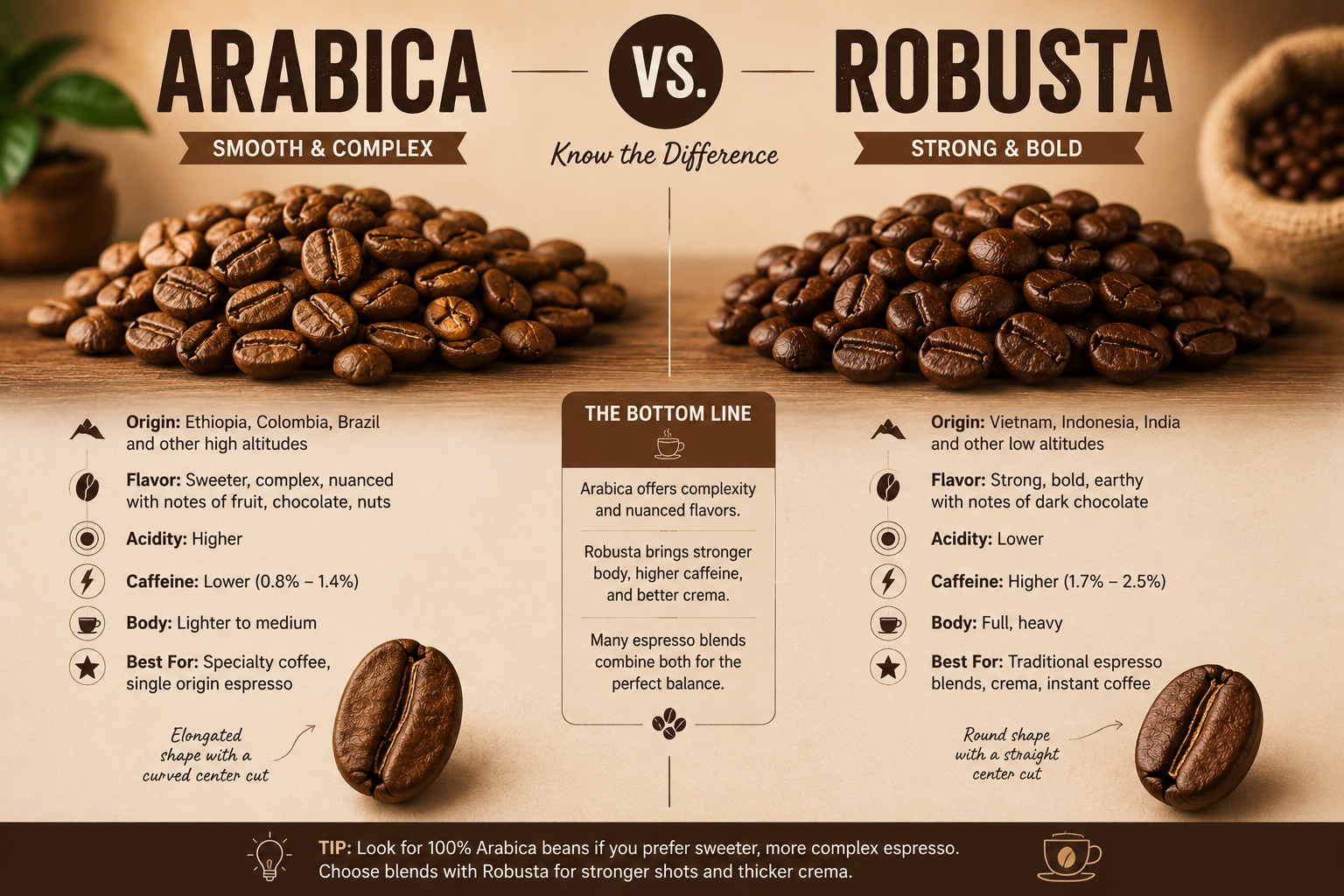
Arabica
Arabica beans are the most popular choice among specialty coffee enthusiasts.
Advantages:
- Sweeter flavor
- More complexity
- Better aroma
- Lower bitterness
Common flavor notes include:
- Chocolate
- Caramel
- Fruit
- Nuts
- Floral notes
Robusta
Robusta beans are often used in traditional Italian espresso blends.
Advantages:
- Stronger body
- More caffeine
- Thicker crema
- Lower cost
Flavor tends to be:
- Earthier
- More bitter
- Less complex
Best Choice
For most home users, high-quality Arabica beans or Arabica-dominant blends provide the best espresso experience.
Split comparison image:
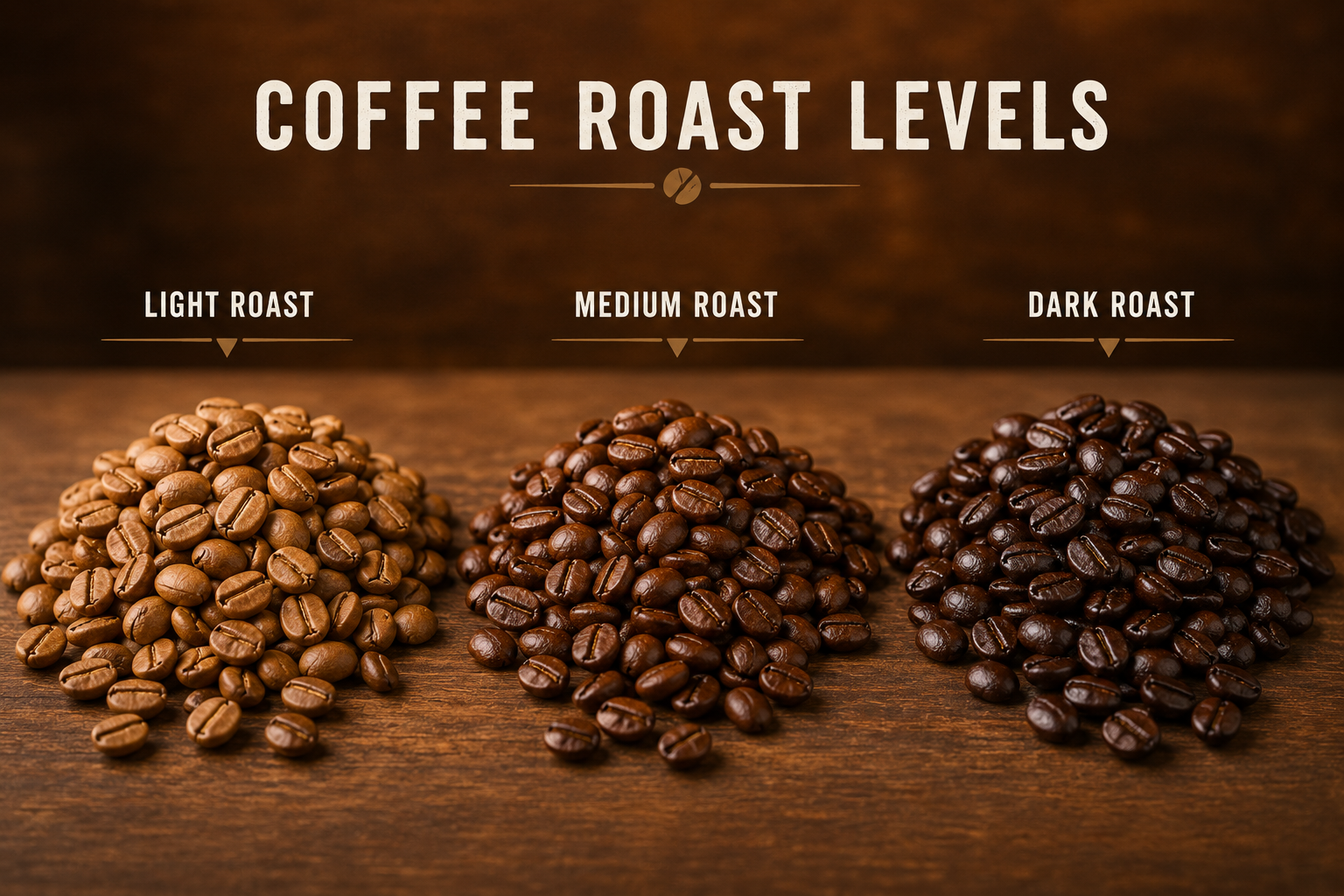
Best Roast Level For Espresso
Light Roast
Light roasts preserve more of the bean’s natural characteristics.
Pros:
- Bright acidity
- Fruit-forward flavors
- High complexity
Cons:
- Harder to extract
- Less forgiving for beginners
Medium Roast
Medium roasts provide excellent balance.
Pros:
- Sweetness
- Good body
- Versatility
Many home baristas consider medium roast the easiest starting point.
Medium-Dark To Dark Roast
Traditional espresso often uses darker roasts.
Pros:
- Rich body
- Chocolate notes
- Lower acidity
- Thick crema
These roasts remain popular among espresso lovers who prefer classic café-style flavor.
Freshness Matters More Than Brand
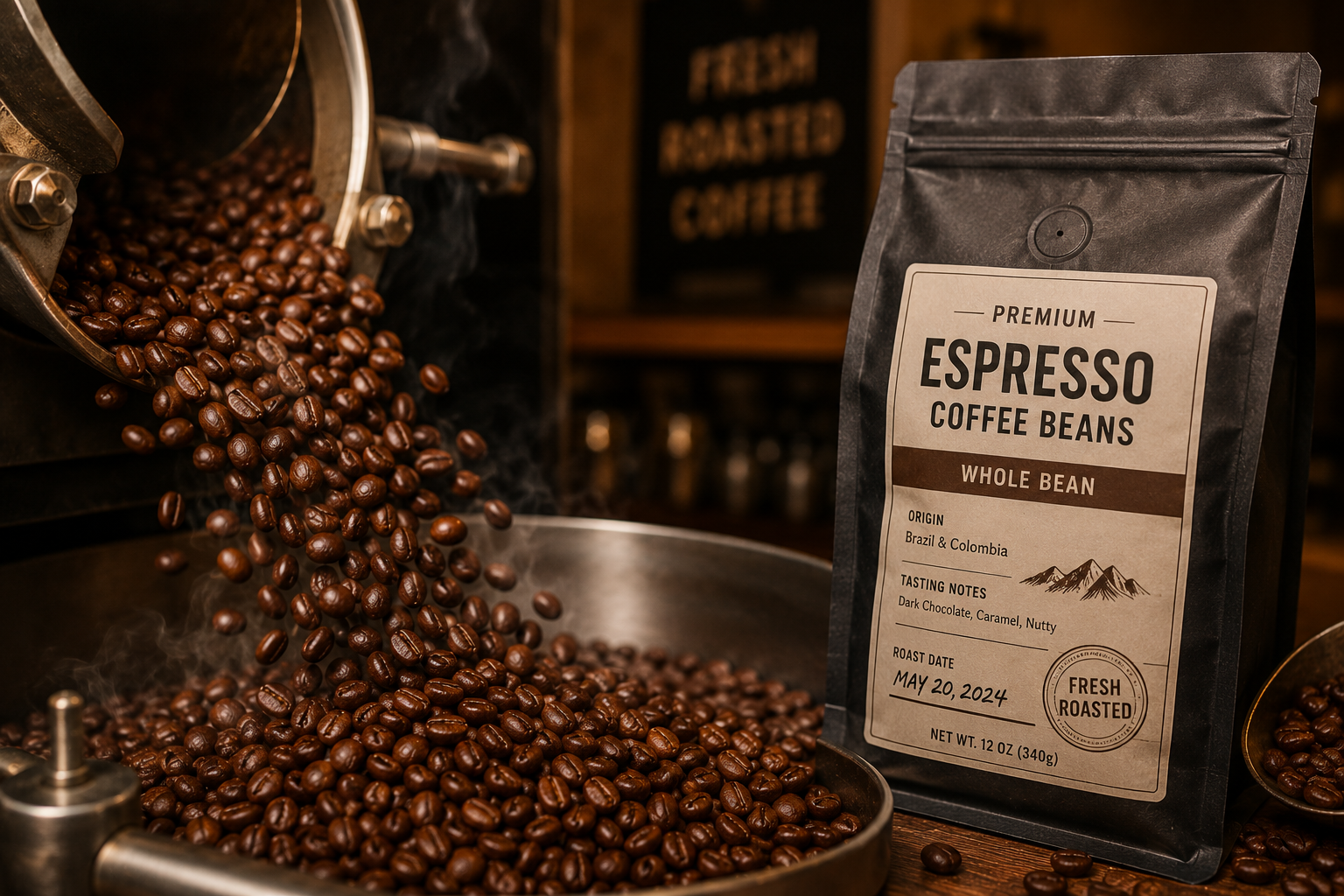
Freshness is often more important than choosing a famous brand.
Ideally:
- Roast date within 2–4 weeks
- Whole beans
- Stored in airtight container
Avoid purchasing beans that only show an expiration date without a roast date.
Fresh coffee generally produces:
- Better crema
- Stronger aroma
- Improved sweetness
- More consistent extraction
Should You Buy Whole Beans Or Pre-Ground Coffee?
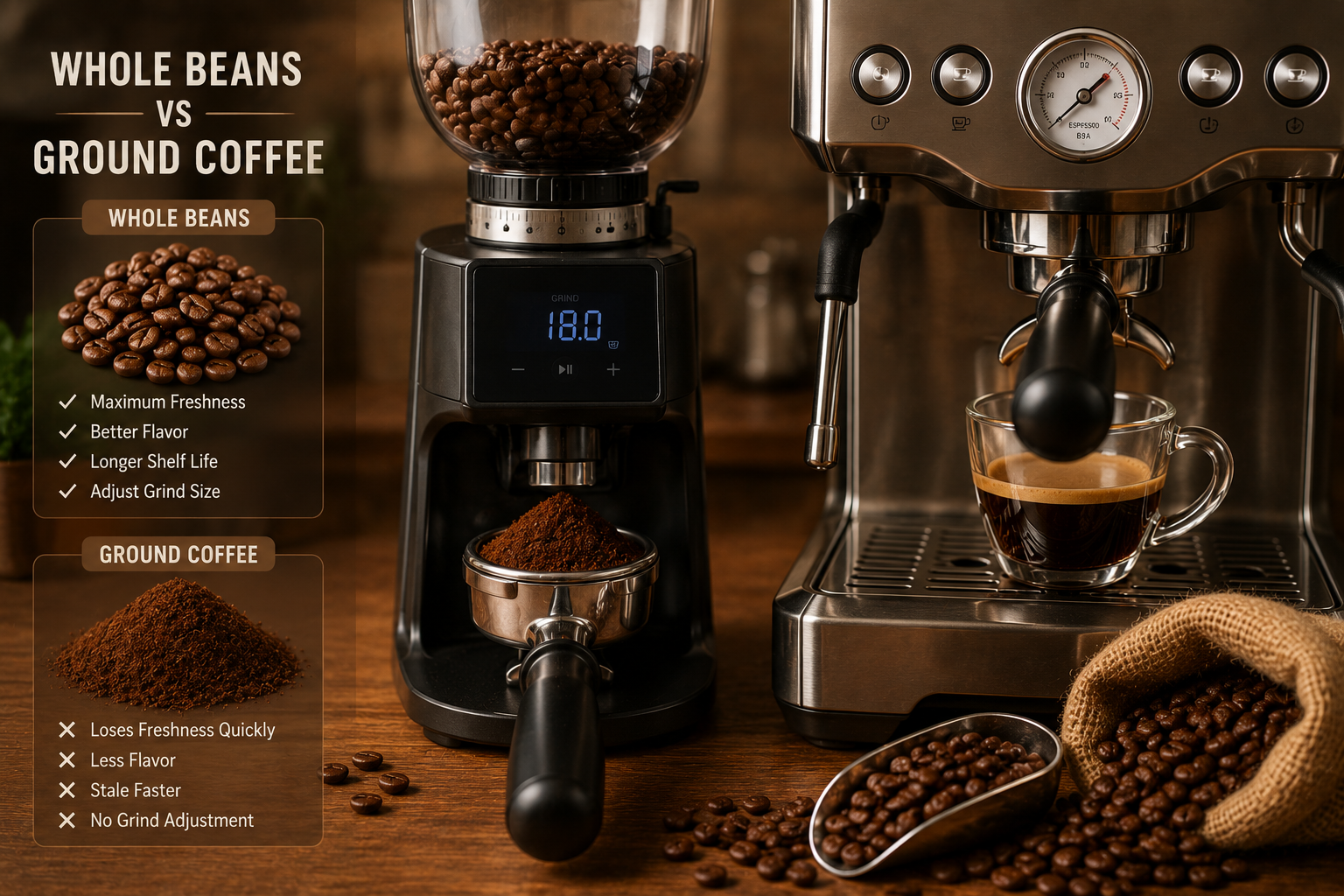
Whole beans are almost always the better choice.
Benefits include:
- Longer freshness
- Better flavor retention
- Adjustable grind size
- Improved espresso quality
Because espresso is highly sensitive to grind size, freshly grinding immediately before brewing can dramatically improve results.
Best Flavor Profiles For Espresso
Different flavor profiles appeal to different drinkers.
Chocolate & Caramel
Perfect for beginners.
Nutty & Sweet
Balanced and versatile.
Fruit Forward
Popular among specialty coffee enthusiasts.
Dark Cocoa & Bold
Traditional Italian-style espresso.
Experimenting with different flavor profiles is one of the most enjoyable parts of espresso brewing.
Common Coffee Bean Mistakes
Avoid these mistakes:
- Buying stale beans
- Using pre-ground coffee
- Ignoring roast date
- Storing beans improperly
- Choosing beans based only on packaging
Small improvements in bean quality often create larger improvements than upgrading equipment.
Frequently Asked Questions
Can I use regular coffee beans for espresso?
Yes. Any coffee bean can technically be used for espresso, but beans roasted specifically for espresso often provide better extraction and flavor balance.
How fresh should espresso beans be?
Most espresso enthusiasts prefer beans roasted within the previous 2–4 weeks.
Are expensive beans always better?
Not necessarily. Freshness and roast quality often matter more than price.
Should beginners use light or dark roast?
Medium or medium-dark roasts are usually the easiest place to start.
Final Thoughts
The best coffee beans for espresso depend on personal taste, but freshness, roast quality, and proper storage matter more than brand names.
For most home users, freshly roasted medium or medium-dark Arabica beans provide the easiest path to rich crema, balanced flavor, and consistently enjoyable espresso.
Write Your Review
No reviews yet. Be the first to share your experience!