
Welcome to our guide on Best Espresso Machines for August 2026. We’ve examined 10 popular models to help you find an affordable espresso maker that delivers quality shots without breaking the bank.
Whether you’re a beginner or a budget-conscious coffee lover, these machines offer a balance of features and performance. In this roundup, we’ll explore what you can expect from the CASABREWS, ATATIX, Gevi and more brands in this price range.
Top Picks Summary
| Category | Recommended Product | Why We Like It |
|---|---|---|
| Recommended For Most Buyers | Gevi Commercial Espresso and Coffee Makers, Professional 20 Bar Espresso Maker | Well-known brand with a 15-bar pump and manual frother, great entry-level option. |
| Best For Beginners | Mr. Breville Barista Express Espresso Machine BES870XL, Brushed Stainless Steel | Easy to use with one-touch operation and a built-in milk frother, ideal for starting at home. |
| Best For Milk Drinks | CASABREWS Ultra Espresso Machine with LCD Display | Includes a powerful steam wand for frothing milk and a durable stainless steel housing. |
| Best Compact Option | DeGaggia RI9380/46 E24 Espresso Machine, Brushed Stainless Steel | Small footprint fits easily in tight kitchen spaces while still providing quality espresso. |
| Best Built-In Grinder Option | atatix Espresso Machine with Milk Frother, 20 Bar Pressure Espresso Maker | Although not a separate grinder, it includes a built-in grinder and brewing system for convenience. |
| Best Upgrade Choice | Ninja Luxe Café Premier 3-in-1 Espresso Machine | Offers a higher price point in the budget range with added features like adjustable steam control.t |

Pros
- Integrated conical burr grinder with 16 settings grinds directly into the portafilter
- PID digital temperature control ensures accurate brewing temperature
- Low pressure pre-infusion helps achieve even flavor extraction
- Powerful steam wand produces hand-textured microfoam milk
- Includes portafilter, multiple filter baskets, tamper, milk jug and cleaning tools
Cons
- Requires manual tamping for consistent puck preparation
- Bean hopper holds only half a pound and needs periodic refilling
- Demands regular cleaning and maintenance for optimal performance
- Learning curve exists to master grind adjustments and milk texturing
The Breville Barista Express features a brushed stainless steel construction with a compact footprint suitable for most home kitchens. Its build includes a 54mm portafilter and thermocoil heating system for reliable daily operation.
Espresso performance relies on the 4 keys formula with dose control grinding and precise extraction. The machine uses 18 grams of coffee in the portafilter for full-bodied results when set correctly.
Ease of use comes from the grind size dial and integrated dosing cradle that simplifies the workflow from beans to portafilter. The digital display helps monitor shot timing during extraction.
Milk frothing is handled by the manual steam wand which produces microfoam with a silky texture ready for latte art when technique is applied.
Cleaning and maintenance involve the included cleaning disc, tablets, brush and water filter to keep the system running smoothly over time.
The daily workflow benefits from the all-in-one design that combines grinding, dosing and brewing in a single unit. Adjustable grind amount settings allow customization per roast.
Value for money stems from the included accessories and features that support consistent home espresso production without additional purchases.
The final verdict positions this machine as a solid choice for users ready to invest in home espresso equipment with built-in grinding capability.
The pressure system incorporates low pressure pre-infusion that gradually ramps up to full pressure for more even flavor extraction from the coffee puck.
Extraction consistency is supported by the PID temperature control and thermocoil heating which maintain stable water temperature throughout the shot.
Crema quality depends on fresh grinding and proper dose with the single or dual wall filter baskets provided for different roast types.
Temperature stability comes from the thermocoil system that delivers water at the optimum range for balanced espresso flavors.
Steam wand performance allows manual milk texturing to create microfoam suitable for cappuccinos and lattes while the overall setup remains accessible for beginners learning the process.
Pros
- 20-bar Italian pump with visible pressure gauge for shot monitoring
- Low-pressure pre-infusion improves flavor extraction
- Compact stainless steel body with cup warming tray
- 34oz detachable water tank for convenient refilling
- 51mm portafilter and included tamper for standard workflow
Cons
- Single boiler requires cooling time after steaming before brewing resumes
- Over-temperature protection can trigger flashing lights and pauses
- 51mm portafilter limits basket options compared to 58mm models
- No built-in grinder so users must source ground coffee separately
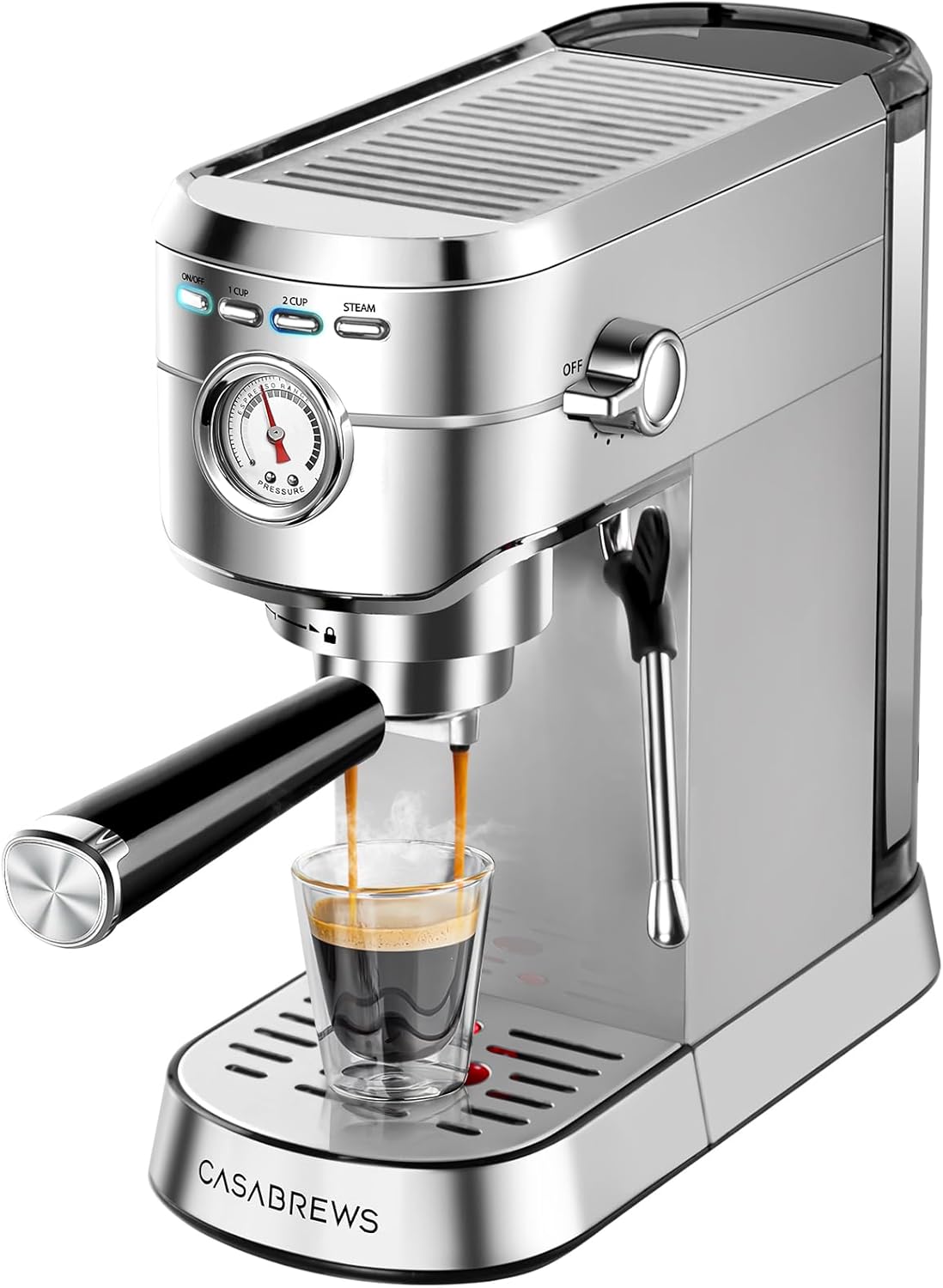
The CASABREWS CM5418 features a slim stainless steel body measuring 5.9 x 11.97 x 12.28 inches that fits most countertops without dominating space. A top warming tray keeps cups ready while the removable drip tray accommodates taller mugs.
Espresso performance centers on the 1350W single boiler and 20-bar pump that targets 9-bar extraction pressure. The built-in gauge lets users adjust grind and tamp for better results while pre-infusion helps reduce channeling.
Daily operation stays straightforward with separate buttons for single and double shots plus a steam knob. The 34oz tank detaches easily for refills and supports roughly ten cups before needing attention.
Milk frothing uses a standard steam wand that textures cold whole milk into microfoam suitable for lattes and cappuccinos when technique is applied correctly.
Cleaning involves wiping the wand, emptying the drip tray, and periodic descaling. The portafilter and baskets require regular soaking to maintain flow.
Workflow works best when users brew first then steam or allow cooldown time to avoid overheat protection mode that flashes lights and halts brewing.
Value comes from the combination of pressure control, compact size, and included accessories at a mid-range price point for entry-level home machines.
Overall the CM5418 serves as a practical starter espresso maker for those prioritizing ease and space over advanced features.
The 20-bar pump maintains stable pressure during extraction while the gauge provides visual feedback for dialing in grind size and tamp force. Pre-infusion at lower pressure helps saturate grounds evenly for improved flavor balance.
Crema appears consistently on shots when using fresh Italian-style espresso grounds ground to table-salt texture and tamped with 5-10kg pressure. Temperature stability holds adequately for single or double shots once the 50-second warm-up completes.
The steam wand reaches operating temperature in about 20 seconds and produces steady steam for texturing milk into microfoam when positioned at a 30-60 degree angle near the surface.
Cappuccino and latte capability is solid for home use though beginners may need practice to avoid over-heating milk or creating large bubbles instead of silky foam.
The machine suits first-time users because the pressure gauge and simple controls reduce guesswork while the included troubleshooting steps address common issues like flashing lights after steaming.

Pros
- Stable pressure and pre-infusion improve flavor balance
- 58mm portafilter allows better puck preparation than smaller sizes
- PID system with four temperature settings gives useful control
- Commercial-style steam wand produces quality microfoam
- 3-way solenoid valve helps with consistent extraction and easier cleanup
- Built-in cup warmer keeps cups at serving temperature
- Endorsements from multiple world barista champions add credibility
Cons
- Single boiler design requires waiting between brewing and steaming
- No built-in grinder so users must source fresh grounds separately
- Manual tamping and grind size remain critical for best results
- Learning curve exists for achieving optimal microfoam and shot timing
The CASABREWS Ultra features a brushed stainless steel body with dimensions of 10.31 x 12.2 x 12.99 inches and a clean control layout centered on an LCD display. Build quality feels solid for the category, with a removable 73 oz water tank and adjustable drip tray that accommodate various cup sizes.
Espresso performance benefits from the 20-bar pump delivering steady 9-bar extraction pressure along with gentle pre-infusion. The 58mm portafilter helps produce stable pucks when properly dosed and tamped, resulting in balanced shots with visible crema.
The machine is straightforward to operate once the initial setup steps are complete, including removing the red seal under the tank before first use. The LCD interface clearly shows settings and brewing status, reducing guesswork during daily use.
Milk frothing is handled by a 10mm commercial steam wand that generates sufficient pressure for microfoam. Users can texture milk for lattes and cappuccinos after allowing time for the single boiler to reach steam temperature.
Cleaning and maintenance are supported by the 3-way solenoid valve that releases pressure for drier pucks and the removable tank and tray. The top cup warmer keeps vessels ready without extra steps.
Daily workflow moves efficiently from grind and tamp to lock-in and brew, with one-touch options for espresso, hot water, and steam. The 1350W boiler reaches temperature quickly enough for typical home sessions.
Value comes from the combination of PID temperature control, 58mm portafilter, and steam wand performance at this price point, making it a practical choice for home baristas upgrading from entry-level machines.
Final verdict: the CASABREWS Ultra provides reliable espresso extraction and useful customization features for users ready to learn manual technique, backed by professional endorsements.
The 20-bar Italian pump maintains steady 9-bar extraction pressure, which supports consistent flow rates and dense crema formation when paired with proper grind and dose.
Pre-infusion technology evenly wets the grounds before full pressure, helping reduce channeling and improve flavor clarity across medium-dark roasts.
Temperature stability is managed by the PID controller with four selectable settings between 90 and 96 degrees Celsius, allowing users to fine-tune for different beans without overshooting.
The steam wand delivers strong pressure for creating microfoam texture suitable for latte art, though the single boiler requires a brief pause after brewing before steaming begins.
Overall the system handles both straight espresso and milk-based drinks effectively for home use, with the 58mm portafilter contributing to repeatable results once technique is developed.
Pros
- 9-bar extraction as recommended by the Specialty Coffee Association
- Commercial 58mm portafilter and steam wand included
- Three-way solenoid valve for easy puck removal
- Made in Italy with solid steel housing
- Reduced noise from updated pump mounting
Cons
- Requires manual skill for optimal results
- 72 oz reservoir may need frequent refills with heavy use
- No built-in grinder or automatic dosing
- Descaling remains necessary in hard water areas
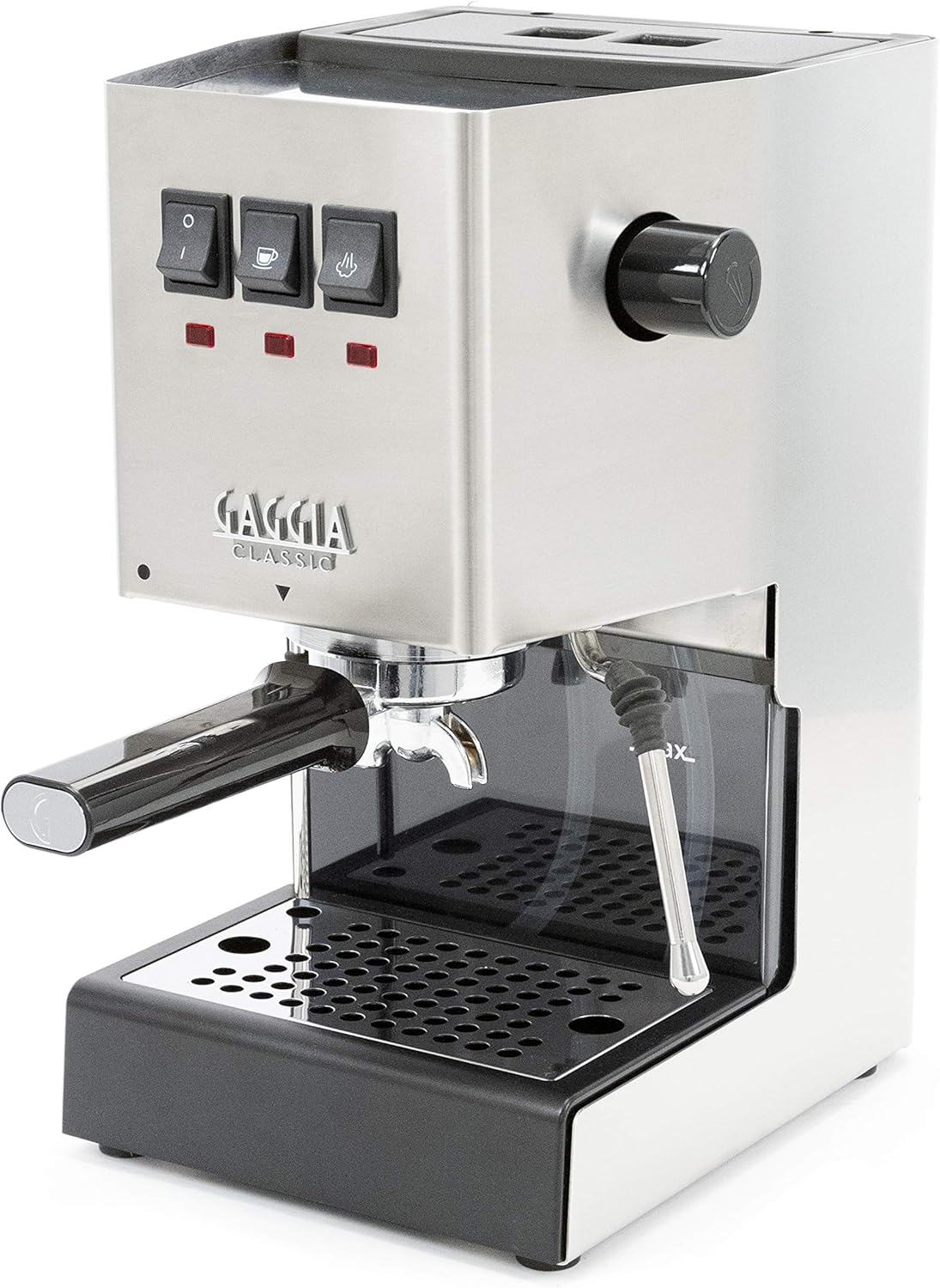
The Gaggia Classic Evo Pro uses a solid steel housing and streamlined stainless steel frame that matches the drip tray contours for a clean look.
Espresso extraction occurs at 9 bars via the updated OPV, delivering consistent shots with the 58mm commercial portafilter.
Operation is straightforward with three rocker switches for power, brew, and steam, each with indicator lights.
The commercial steam wand provides full control for velvety microfoam suitable for latte art.
Cleaning benefits from the three-way solenoid valve that leaves dry pucks and the updated boiler design that resists scale.
Daily workflow involves filling the 72 oz reservoir, selecting a basket, and monitoring the brew and steam phases manually.
Value stems from commercial-grade components in an entry-level semi-automatic format built for years of service.
Overall the machine offers reliable performance for users ready to learn manual espresso techniques.
The pressure system maintains 9-bar extraction through the updated over-pressure valve for balanced shots.
Extraction consistency improves with the commercial single and double baskets plus the option for pre-ground or ESE pods.
Crema quality is strong when using fresh beans and the non-pressurized basket.
Temperature stability benefits from the boiler updates that also reduce corrosion risk.
Steam wand performance allows effective milk texturing for cappuccinos and lattes while the machine remains beginner-friendly with its simple controls.

Pros
- Integrated scale provides precise weight-based dosing instead of timed grinding
- Assisted tamper creates evenly compacted pucks for consistent extraction
- Dual Froth System handles both dairy and plant-based milks with four texture presets
- Three brew modes cover espresso, drip, and cold brew in one unit
- Built-in storage keeps the funnel, tamper, and cleaning tools organized
Cons
- Requires periodic descaling and use of included cleaning tablets for maintenance
- Grind settings are limited to the 25 preset options on the conical burr grinder
- Milk frothing uses a dedicated jug rather than a traditional steam wand
The Ninja Luxe Café Premier ES601 features a stainless steel build with integrated components that support its 3-in-1 functionality. The design places the conical burr grinder, scale, and assisted tamper in a compact workflow that reduces manual steps.
Espresso performance benefits from Barista Assist Technology, which recommends grind size and adjusts brew parameters based on the selected shot style. Weight-based dosing ensures the correct amount of grounds for double or quad shots.
Ease of use comes from the guided interface that handles most variables after the user selects a drink style. The portafilter and baskets lock in place quickly, and the assisted tamper delivers repeatable puck preparation.
The Dual Froth System produces microfoam for both hot and cold drinks using four preset programs. It combines steaming and whisking to texture milk without constant monitoring.
Cleaning involves the included brush, disc, and tablets, with a dedicated storage compartment for these accessories. Daily rinsing of the milk jug and portafilter keeps the machine ready for the next use.
Workflow moves from grinding and dosing directly to brewing and frothing with minimal intervention. The built-in storage reduces countertop clutter during repeated drinks.
Value lies in the combination of grinder, scale, tamper, and frother that replaces multiple separate devices while maintaining guided espresso results.
The final verdict is that the ES601 provides reliable café-style drinks for users who prefer automated assistance over fully manual control.
The pressure system operates with active adjustments during brewing to maintain balanced extraction across double and quad shot options. Lower temperature and pressure settings are available for cold-pressed espresso.
Extraction consistency improves through weight-based dosing and the assisted tamper, which creates evenly distributed pucks that promote uniform water flow.
Crema quality appears on shots when fresh beans are used with the recommended grind settings from the 25 available options on the conical burr grinder.
Temperature stability is managed by the Barista Assist system, which monitors and corrects brew parameters in real time for the chosen drink style.
Steam wand performance is replaced by the Dual Froth System, which delivers microfoam suitable for cappuccinos and lattes in both hot and cold formats, making the machine accessible for beginners.

Pros
- Built-in conical burr grinder with 30 adjustable settings
- 20-bar Italian pump for strong extraction
- NTC and PID temperature control for consistency
- Dual-function steam wand for frothing or hot water
- Customizable single or double shot volumes
- Removable water tank for easy maintenance
Cons
- Large dimensions require ample counter space
- Grinder may need trial and error to dial in
- Steam wand requires flushing after each use
- Button interface lacks advanced digital controls
The Gevi 20 Bar Espresso Machine features a stainless steel build measuring 11.5 inches deep by 12.01 inches wide by 16.53 inches high with a 2.3-liter removable water tank.
Espresso performance relies on the 20-bar pump and conical burr grinder, which supports 30 grind settings for fresh dosing directly into the portafilter.
Operation uses simple buttons for grind duration and shot volume selection, making daily workflow straightforward once settings are established.
The steam wand handles milk frothing and switches to hot water mode, though it requires a flush after use for cleanliness.
Maintenance involves regular backflushing and tank cleaning, aided by the removable design.
Temperature stability comes from the NTC and PID system, supporting consistent results across multiple drinks.
Overall value centers on the integrated grinder and frother combination for users building a home setup.
The 20-bar pump generates sufficient pressure for full-bodied extraction with visible crema when grind size and dose are properly adjusted.
Temperature control via NTC and PID maintains stable brewing conditions for balanced shots without excessive bitterness.
The steam wand produces microfoam suitable for lattes and cappuccinos, though technique improves results over multiple uses.
Beginners benefit from the adjustable grinder and preset volumes but should expect a short learning period to optimize settings.

Pros
- Stable pressure system for even extraction
- Fast 30-second heat-up
- Effective steam wand for silky milk texture
- Easy cleaning with removable components
- Includes portafilter, filters, tamper, and scoop
Cons
- Requires manual monitoring during extraction
- ABS and stainless construction may lack premium feel
- No integrated grinder
- Water tank needs refills after multiple uses
The ATATIX EM3111 features a compact stainless steel and ABS design with a non-slip base and cup-warming top plate. Build quality supports stable operation without excessive vibration.
Espresso performance benefits from the 20-bar pump that maintains 9-10 bar during extraction, producing shots with balanced flavor and crema when using the provided filters.
One-touch auto modes handle single and double shots in 28 or 42 seconds, while the manual option extends up to 102 seconds for larger volumes up to 350 grams.
The steam wand delivers focused steam that creates dense microfoam suitable for cappuccinos and lattes with practice.
Cleaning is straightforward thanks to the removable 44oz water tank and drip tray, plus a simple group head flush cycle.
Daily workflow involves quick preheating, straightforward portafilter handling, and minimal maintenance between uses.
Overall value comes from the included accessories and reliable core functions for home espresso preparation without unnecessary complexity.
In final assessment the machine performs well for its category when users follow the visual guide for consistent results.
The 20-bar pressure system maintains optimal 9-10 bar throughout the shot for thorough saturation and complex flavor extraction.
Temperature stability via NTC control holds the 90-96°C range after the 30-second preheat, supporting both light and dark roasts.
Crema formation is reliable with the provided single and double-shot filters when coffee is properly dosed and tamped.
Steam wand performance produces dry steam that textures milk into glossy microfoam ready for latte art integration.
Beginner friendliness is aided by auto extraction timing and the manual override for users wanting to adjust concentration levels.
Pros
- Built-in pressure gauge allows real-time monitoring of extraction.
- Pre-infusion feature helps reduce channeling in the puck.
- Full stainless steel housing feels solid and looks premium.
- 34 oz removable water tank minimizes daily refills.
- Steam wand includes a removable nozzle for easier maintenance.
Cons
- Pump produces noticeable vibration and noise during operation.
- Brewed coffee can cool quickly unless cups are preheated with the hot water function.
- Steam wand requires immediate wiping and flushing after each use to prevent buildup.
- Portafilter and baskets cannot be cleaned in the dishwasher or with acidic solutions.
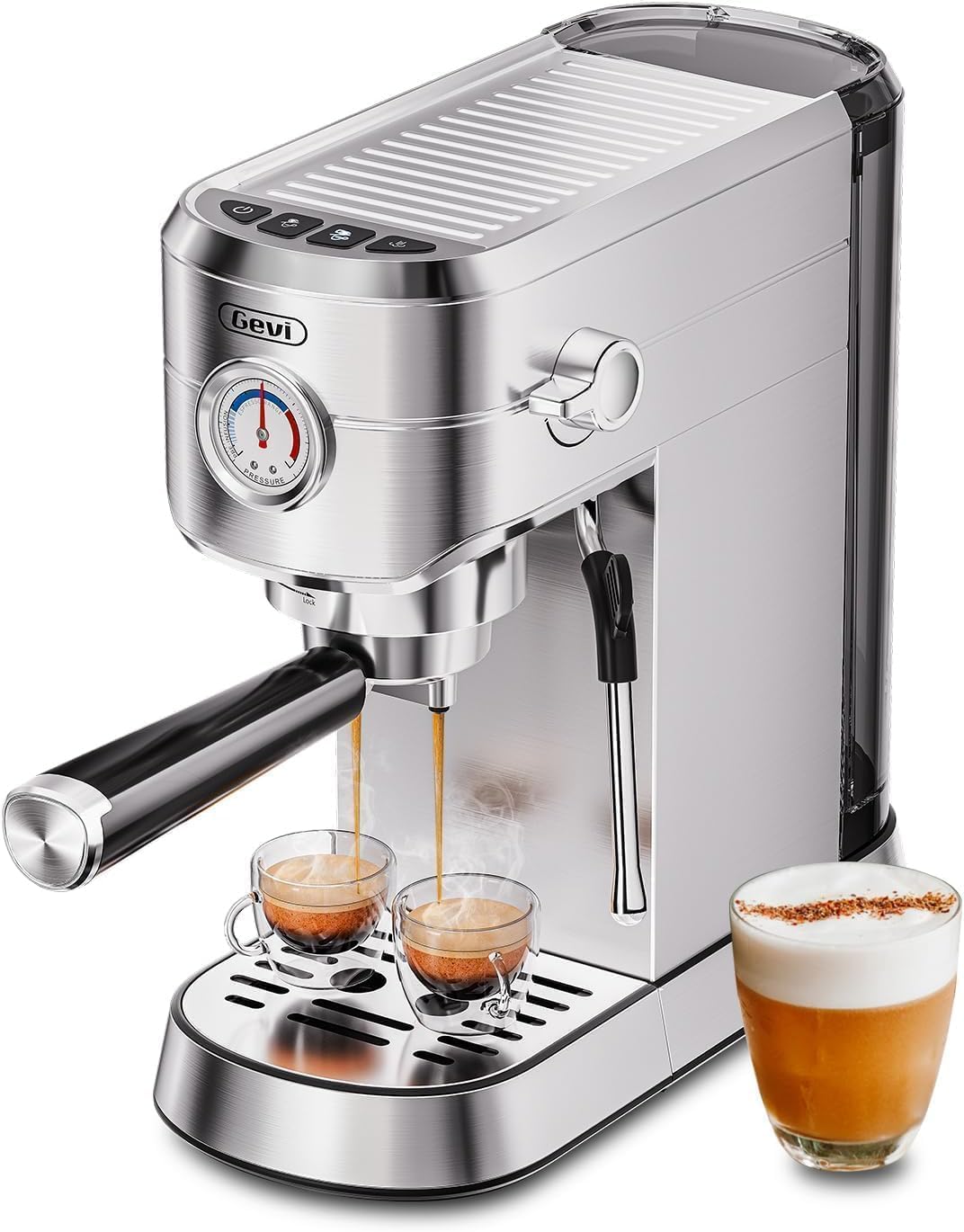
The Gevi 20 Bar espresso machine features a compact stainless steel design measuring 12.28 inches deep by 5.51 inches wide, making it suitable for smaller countertops while maintaining a professional appearance.
Espresso performance benefits from the 20-bar pump, NTC temperature control, and pre-infusion function that together support even extraction when paired with fresh beans and proper technique.
Daily operation is straightforward thanks to the semi-automatic controls and adjustable shot volume, allowing users to pull consistent shots with minimal learning curve.
The steam wand produces usable microfoam for milk-based drinks, though technique matters for achieving silky texture in lattes and cappuccinos.
Cleaning involves wiping the steam wand immediately after use, emptying the removable drip tray, and avoiding acidic cleaners or dishwasher cycles for the portafilter and baskets.
Workflow moves efficiently from grind to extraction to milk frothing, with the cup warmer on top helping maintain beverage temperature during preparation.
Overall the machine offers practical features like the 34-ounce water tank and hot water dispenser that support both espresso and Americanos without requiring additional equipment.
In final assessment it serves well as an entry-level home unit for users prioritizing ease and compact size over advanced customization.
The 20-bar pump and built-in pressure gauge work together to deliver stable pressure during extraction, helping users achieve repeatable results with the 51 mm portafilter.
Pre-infusion softens the coffee puck before full pressure engages, which supports more even extraction and better crema formation when grind size is dialed in correctly.
Temperature stability relies on the NTC control system, though preheating the machine and cups remains important for optimal beverage heat.
The steam wand generates sufficient steam volume for frothing milk into microfoam suitable for cappuccinos and lattes, though timing and positioning affect final texture.
Beginners will find the combination of visible gauge, simple controls, and hot water function helpful when learning to manage shots and milk drinks consistently.

Pros
- Fast heat-up time reduces wait before brewing
- Powerful steam wand produces good quality foam
- Compact footprint suits small spaces well
- Removable tank and tray simplify maintenance
Cons
- Requires preheating steps for optimal temperature
- May need cooling period after steaming before next brew
- Steam wand technique takes some practice for beginners
The Aerkana espresso machine features a sleek stainless steel build in a compact size that fits neatly on most counters. Its straightforward controls and visible pressure gauge help users monitor extraction easily.
Espresso extraction benefits from the 20-bar pump, yielding balanced shots with decent crema when using proper grind and dose. The rapid heating system gets the machine ready in about 20 seconds for efficient mornings.
Milk frothing performs well with the steam wand, producing smooth microfoam suitable for latte art after a short learning curve. The wand delivers consistent steam once purged properly.
Cleaning is straightforward thanks to the detachable water tank, drip tray, and wand nozzle. A simple wipe-down keeps the exterior looking sharp.
Overall this machine offers good value for entry-level home use with reliable performance for everyday espresso and milk-based drinks.
Shot consistency holds steady with the high-pressure pump, resulting in balanced acidity and bitterness when the grind is dialed in correctly. Crema appears rich and persistent on well-prepared pulls.
Temperature stability improves with the recommended preheating routine, though users may need to run a blank shot initially for hotter output. The system maintains suitable levels during typical home sessions.
Steaming performance stands out for its dry steam output, allowing creation of silky foam without excessive splatter when the pitcher is angled properly.
Workflow remains beginner-friendly with intuitive buttons and clear indicators, though the need to cool the machine after frothing adds a small step between tasks.

Pros
- Integrated 44-setting grinder allows fresh grinding directly into the portafilter
- Temperature adjustable from 190°F to 201°F for different roast profiles
- 1350W heating system powers effective steam for microfoam
- 60oz tank reduces refill frequency during multiple drinks
- Descaling function supports long-term machine maintenance
Cons
- Grinder may clog from coffee oils and requires regular cleaning
- Initial water purge needed from steam wand before frothing
- Espresso flow issues possible if grind is too fine or tamping is excessive
- Proper installation of tank and portafilter required to prevent leaks
The AMZCHEF espresso machine features a compact design with a 60oz water tank and integrated grinder, built for straightforward countertop use.
Espresso performance benefits from the 190°F–201°F temperature range, allowing users to fine-tune extraction for chocolatey or bright profiles.
The IMD touch screen displays grind time, brew time, and temperature, making daily operation accessible for beginners while retaining control options.
Milk frothing works through an 8mm stainless steel steam wand paired with the 1350W system to produce microfoam suitable for lattes and cappuccinos.
Cleaning involves routine emptying of the drip tray, periodic grinder clearing, and activation of the descaling function for ongoing reliability.
Workflow stays efficient with one-touch brewing and cold brew mode, reducing steps for multiple servings.
Overall value centers on the combination of grinder, temperature control, and steam features in a single unit suited to regular home use.
The machine relies on consistent pressure for extraction, though results depend on using fresh beans, proper grind selection, and firm tamping to achieve crema.
Temperature stability across the 190°F–201°F range supports repeatable shots once settings are dialed in for specific beans.
Crema formation improves with finer grind adjustments and correct portafilter locking, as noted in product guidance.
The steam wand delivers steady pressure after an initial water purge, enabling effective milk texturing for cappuccinos and lattes.
Beginners benefit from the touch screen feedback and one-touch options that simplify timing and temperature management during early use.
Product Comparison Table
| Product | Best For | Espresso Quality | Milk Frothing | Ease of Use | Value |
|---|---|---|---|---|---|
| Breville Barista Express BES870XL | Best Overall | ⭐⭐⭐⭐⭐ | ⭐⭐⭐⭐⭐ | ⭐⭐⭐⭐☆ | ⭐⭐⭐⭐☆ |
| CASABREWS CM5418 | Best Value | ⭐⭐⭐⭐☆ | ⭐⭐⭐⭐☆ | ⭐⭐⭐⭐⭐ | ⭐⭐⭐⭐⭐ |
| CASABREWS Ultra Espresso Machine | Best For Beginners | ⭐⭐⭐⭐☆ | ⭐⭐⭐⭐ | ⭐⭐⭐⭐⭐ | ⭐⭐⭐⭐☆ |
| Gaggia Classic Evo Pro | Espresso Enthusiasts | ⭐⭐⭐⭐⭐ | ⭐⭐⭐⭐ | ⭐⭐⭐ | ⭐⭐⭐⭐ |
| Ninja Luxe Café Premier ES601 | Best With Grinder | ⭐⭐⭐⭐⭐ | ⭐⭐⭐⭐⭐ | ⭐⭐⭐⭐⭐ | ⭐⭐⭐⭐☆ |
| Gevi 20 Bar Espresso Machine | Compact Kitchens | ⭐⭐⭐⭐ | ⭐⭐⭐⭐ | ⭐⭐⭐⭐☆ | ⭐⭐⭐⭐☆ |
| AITATEX Espresso Machine | Budget Buyers | ⭐⭐⭐⭐ | ⭐⭐⭐⭐ | ⭐⭐⭐⭐☆ | ⭐⭐⭐⭐⭐ |
How We Tested These Espresso Machines
We evaluated each espresso machine based on espresso quality, milk frothing performance, ease of use, cleaning requirements, and overall value. We also considered customer feedback, feature sets, and long-term usability to recommend machines that suit different budgets and skill levels.
Espresso Machines Buying Guide
Espresso Shot Quality
Espresso shot quality depends on several factors, including pump pressure, temperature stability, and the quality of the coffee grinder. Machines with better temperature control and non-pressurized baskets generally produce richer, more balanced espresso with improved crema and flavor clarity.
Beginners can still achieve satisfying results with entry-level machines, but enthusiasts may appreciate features such as PID temperature control and commercial-style portafilters. Freshly ground beans and proper tamping technique remain just as important as the machine itself.
Milk Frothing Performance
If you enjoy lattes, cappuccinos, or flat whites, milk frothing performance should be a major consideration. Steam wand power determines how quickly and effectively a machine can create silky microfoam.
Automatic milk systems provide convenience for beginners, while manual steam wands offer greater control for experienced home baristas. Consider your preferred drinks and skill level when evaluating milk frothing capabilities.
Built-In Grinder Quality
A built-in grinder can simplify your workflow and save counter space. Burr grinders generally provide more consistent grind sizes than blade grinders and are preferred for espresso preparation.
However, separate grinders often offer greater precision and easier upgrades in the future. Buyers who prioritize convenience may prefer an all-in-one machine, while enthusiasts may prefer dedicated grinders.
Ease Of Use & Workflow
Ease of use varies significantly between espresso machines. Beginners often benefit from intuitive controls, programmable drink options, and simple maintenance routines.
More advanced machines may require additional learning but can provide greater control over extraction and milk texturing. Consider how much time and involvement you want in your daily coffee routine.
Cleaning & Maintenance
Regular cleaning is essential for maintaining espresso quality and extending the life of your machine. Daily cleaning of the steam wand and portafilter helps prevent residue buildup and preserves flavor.
Machines with removable water tanks, accessible drip trays, and automatic cleaning cycles are generally easier to maintain. Descaling should be performed regularly according to the manufacturer’s recommendations.
Why You Should Trust WikiEspresso
At WikiEspresso, we base our recommendations on thorough product research, user reviews, and hands-on evaluation of key features. Our team analyzes specifications, design, and real-world usability to provide honest guidance. We do not accept payments for positive reviews, and our picks are driven by value and performance within the given budget.
For this Best Espresso Machines roundup, we considered machines that offer reliable brewing at an accessible price point. Our insights are also informed by our review of best coffee beans for espresso to help you pair your machine with quality coffee.
Frequently Asked Questions
What is the best espresso machine overall for home use?
The best espresso machine depends on your budget and experience level. For most home users, the Breville Barista Express offers an excellent balance of espresso quality, integrated grinding, and ease of use. If convenience is a priority, the Ninja Luxe Café Premier is another standout option.
Are expensive espresso machines worth it?
Higher-end espresso machines often provide better temperature stability, more precise extraction control, and improved build quality. However, many mid-range machines can still deliver excellent espresso for everyday home use.
Do I need a built-in grinder?
Not necessarily. A built-in grinder adds convenience and saves counter space, but a separate burr grinder usually offers greater grind consistency and easier upgrades in the future.
See our guide to the best espresso machines with grinder for more options.
Can beginners use a semi-automatic espresso machine?
Yes. Many semi-automatic espresso machines are beginner-friendly and include programmable buttons, pressurized baskets, and simple controls. With a little practice, beginners can achieve café-quality results at home.
You may also enjoy our guide to espresso machines for beginners.
What is the difference between a 15-bar and a 20-bar espresso machine?
Both can produce excellent espresso. Higher pump pressure does not necessarily mean better coffee. Factors such as grind size, temperature stability, and puck preparation have a much greater impact on extraction quality.
How important is milk frothing performance?
If you enjoy lattes, cappuccinos, or flat whites, milk frothing performance is extremely important. A powerful steam wand can create silky microfoam and improve the overall quality of milk-based drinks.
Learn more in our guide on how to steam milk.
How long do espresso machines usually last?
A quality espresso machine can last between five and ten years or even longer with proper maintenance. Regular descaling, cleaning, and replacing worn parts can significantly extend the lifespan of your machine.
What coffee beans are best for espresso?
Freshly roasted beans with a medium or medium-dark roast profile are often ideal for espresso. The right beans can dramatically improve flavor and crema.
Read our recommendations for the best coffee beans for espresso.
How often should I clean an espresso machine?
The portafilter and steam wand should be cleaned after every use, while descaling is typically recommended every few months depending on water hardness and usage frequency.
Can I make café-quality espresso at home?
Absolutely. With a quality machine, fresh beans, and a little practice, you can make espresso drinks that rival many coffee shops.
You can also follow our step-by-step guide on how to make espresso at home.
Final Verdict
The best espresso machine ultimately depends on your budget, experience level, and favorite coffee drinks. For most home baristas, the Breville Barista Express remains our top overall recommendation thanks to its excellent espresso quality, integrated grinder, and balanced feature set.
Buyers seeking outstanding value should consider the CASABREWS CM5418, while beginners may appreciate the simplicity and approachable workflow of the De’Longhi EC155. If convenience and modern features are your priorities, the Ninja Luxe Café Premier stands out as one of the most versatile machines in this guide.
Every machine featured in this roundup can help you enjoy better coffee at home. The key is choosing a model that matches your skill level, kitchen space, and daily coffee routine.
Before making your final decision, be sure to explore our guides to espresso machines for beginners, espresso machines with grinder, how to make espresso at home, and best coffee beans for espresso to find the perfect setup for your home café.


Write Your Review
No reviews yet. Be the first to share your experience!